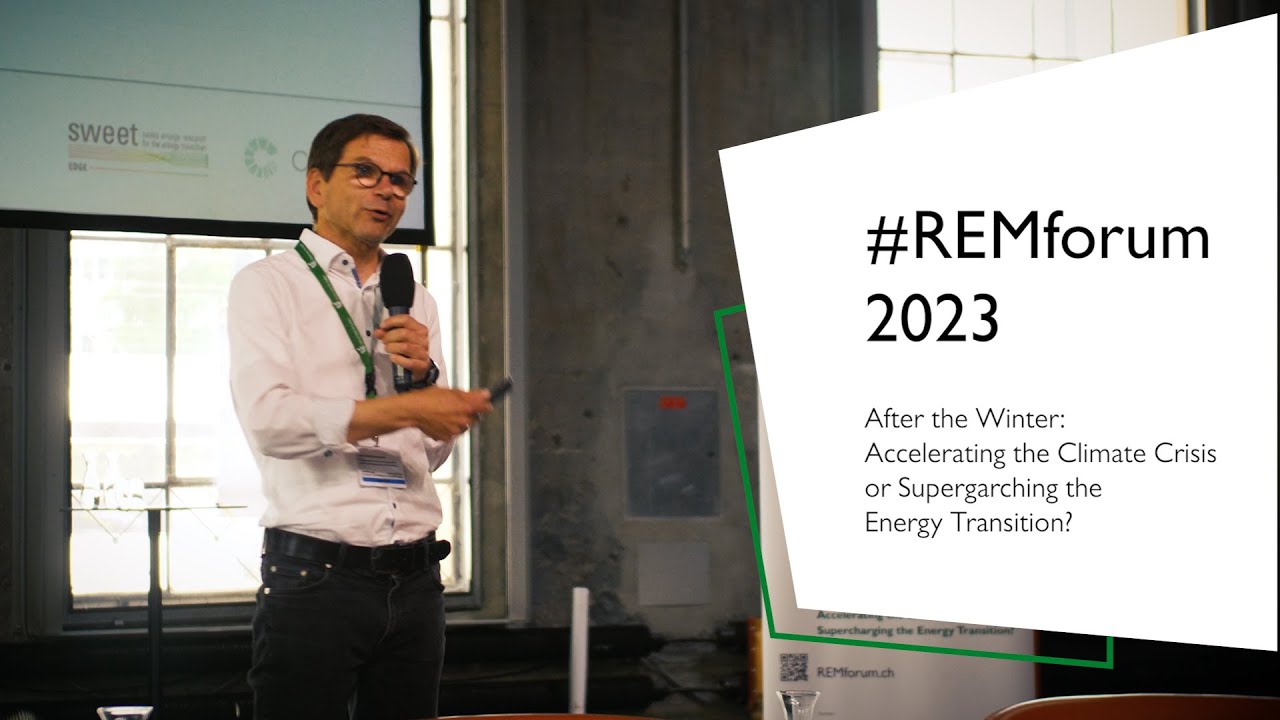
The geopolitical events of 2022 have highlighted Europe’s unsustainable dependence on fossil fuels. While the initial response has been characterized by political firefighting and a period of unprecedented price volatility, it is now time to reflect on the longer-term outlook.
These are the questions that were discussed at the 13th St. Gallen Forum for Management of Renewable Energies (#REMforum).
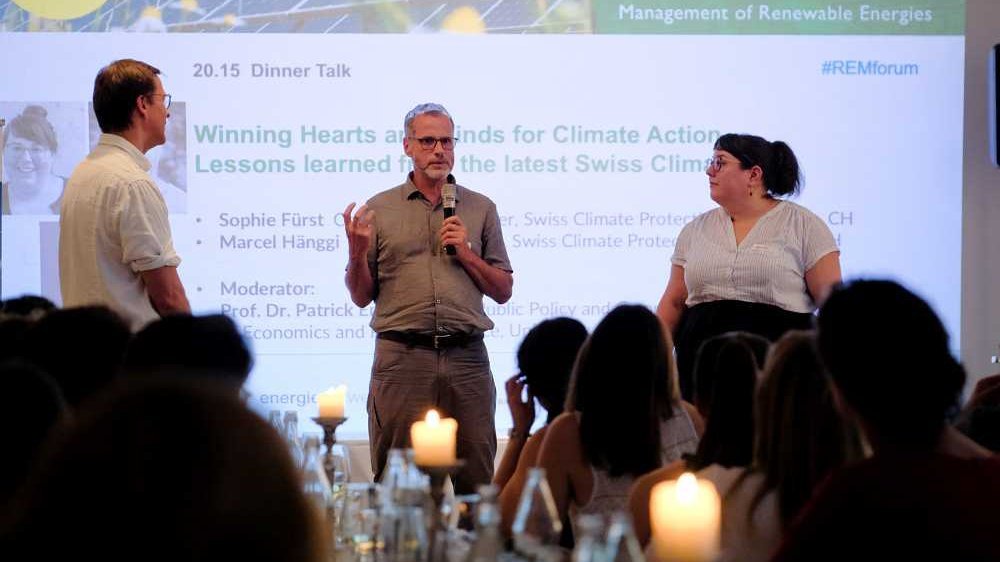
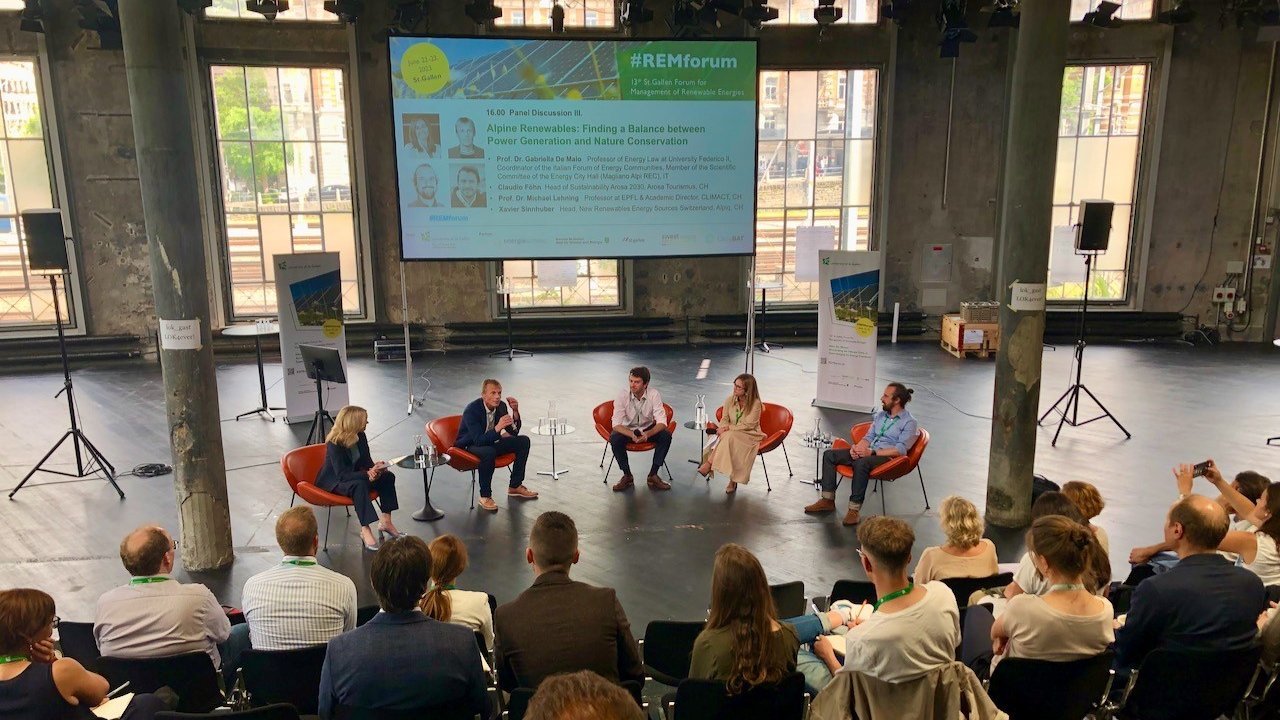
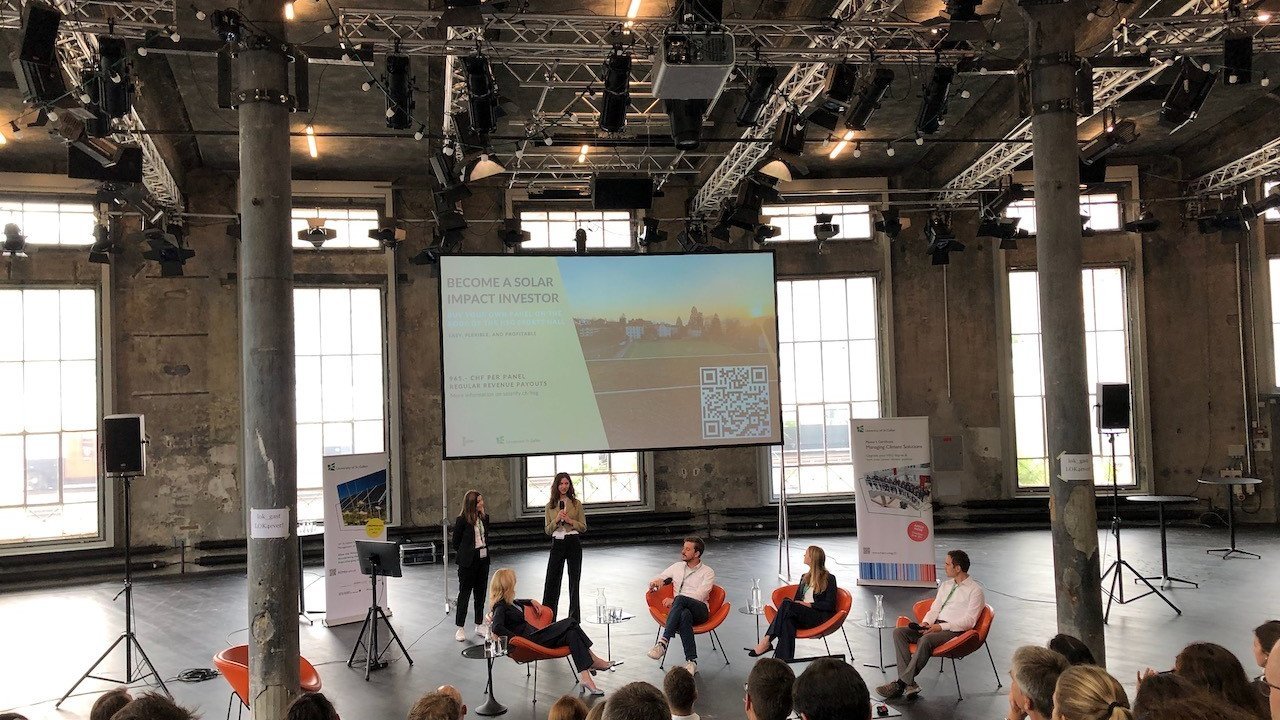
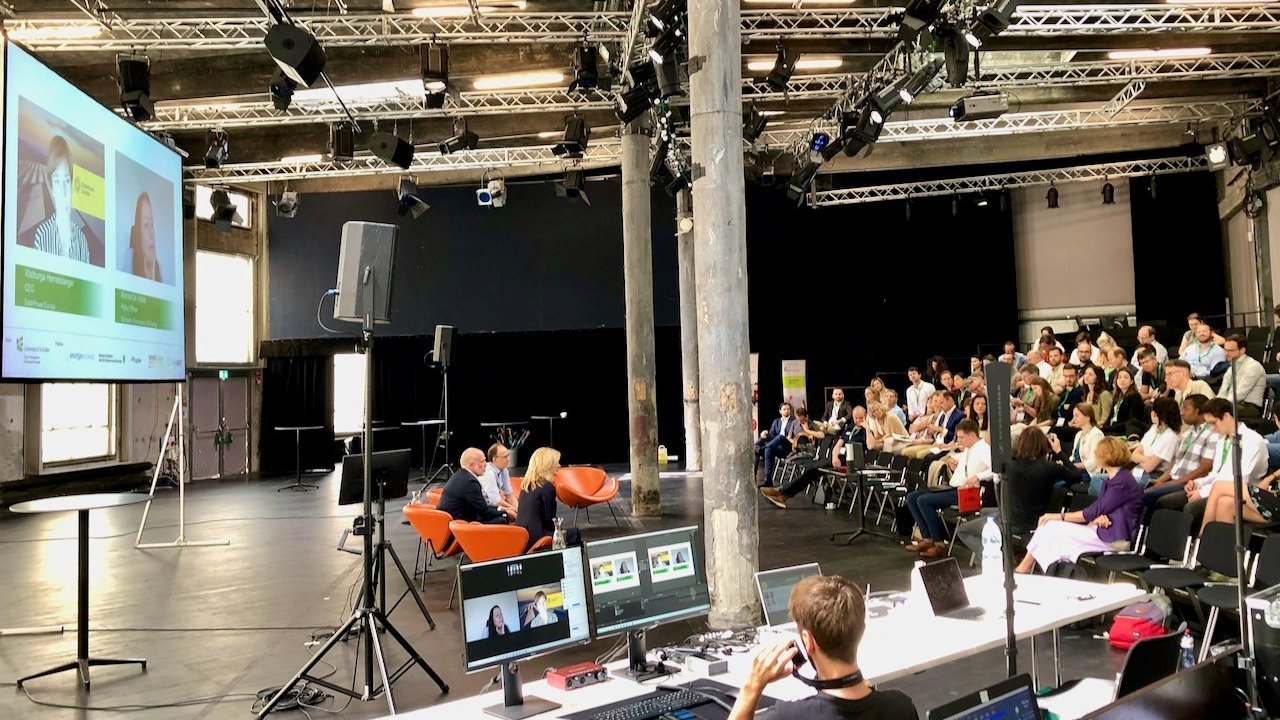
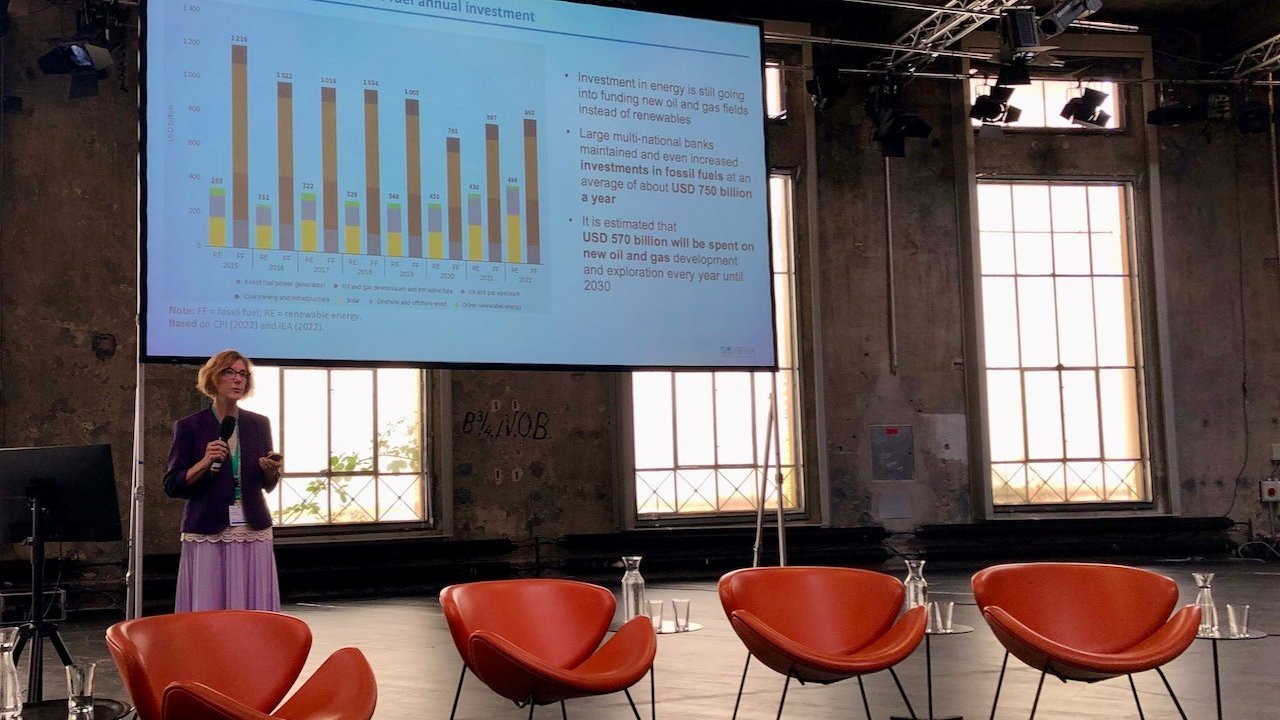
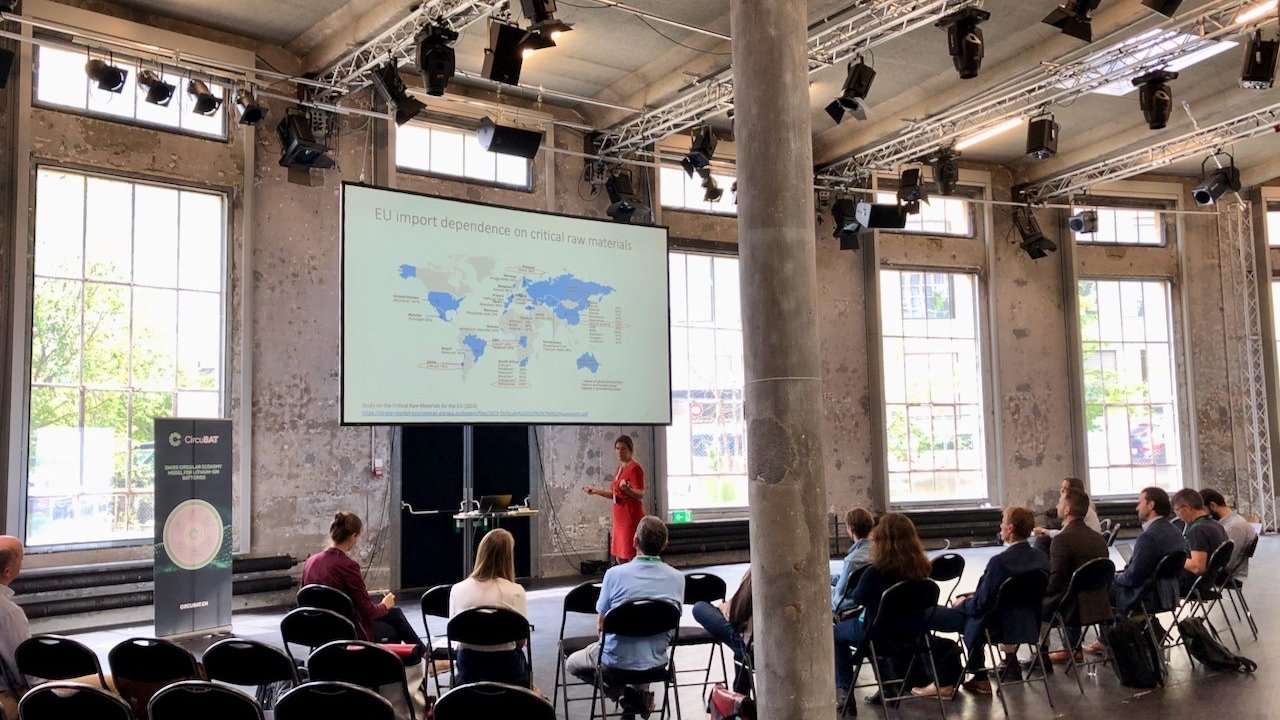
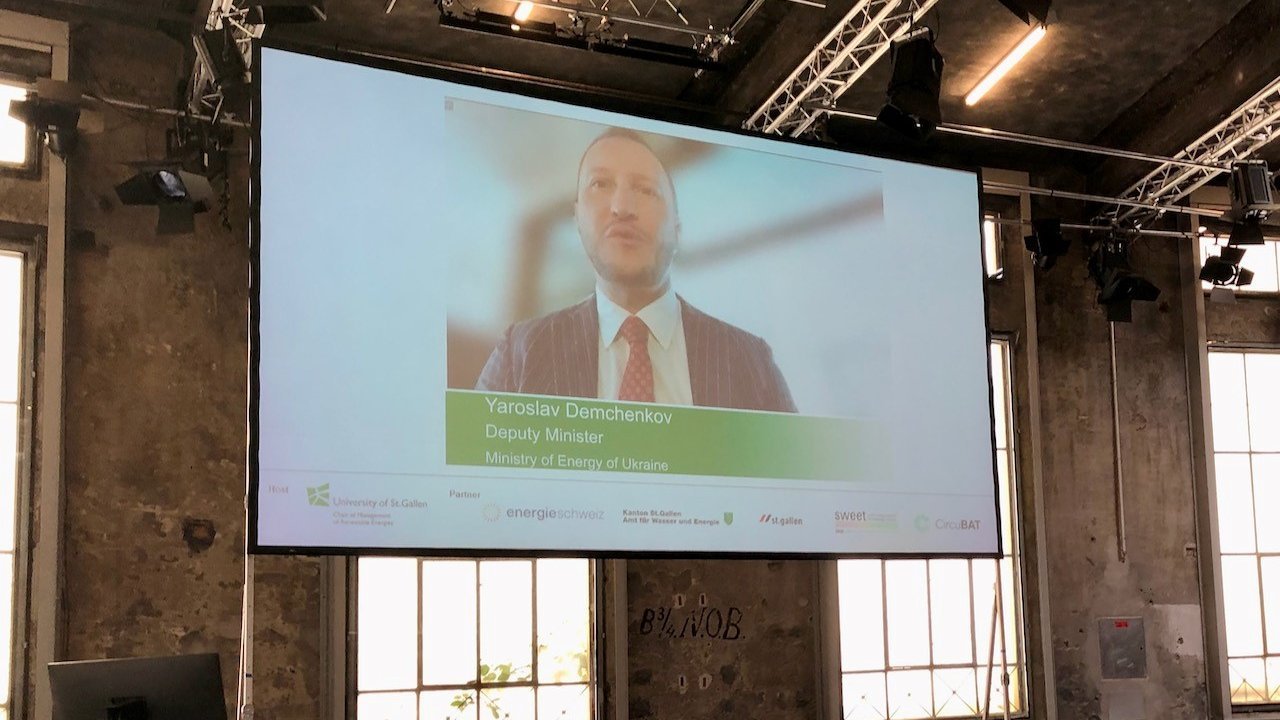
Moderator: Prof. Dr. Patrick Emmenegger Public Policy and Comparative Political Economy, School of Economics and Political Science, University of St.Gallen (HSG), CH
Location: Restaurant "Lagerhaus", Davidstr. 42, 9000 St.Gallen
08:15 Registration
(*) Speakers contribute online
Moderator: Dr. Melinda Crane Chief political correspondent, Deutsche Welle TV, DE
Prof. Dr. Rolf Wüstenhagen Chair of Management of Renewable Energies, University of St.Gallen
Dr. Ute Collier Deputy Director, Knowledge Policy and Finance Centre, International Renewable Energy Agency (IRENA), AE
11:00 Coffee Break
12:15 Lunch
The current energy crisis evokes strong emotions. Reliability and climate concerns intermingle and leave consumers facing the question where their energy should come from. Demand for renewable energy technologies (RET) has surged in light of the crisis. This workshop will discuss the role of emotions in consumer adoption of RETs, here solar PV, heat pumps, and electric vehicles. Particularly, the link between affective and rational factors and how they affect whether consumers adopt RETs is in the focus of this workshop. Professionals shaping the energy transition in Switzerland, Austria, and Germany will share their insights on the topic. After a presentation of findings from recent consumer surveys conducted in Germany and Switzerland, we will discuss their implications for renewable energy managers and policymakers.
Establishing a circular economy for used EV batteries is a key strategy for implementing a sustainable mobility system. While lacking the necessary volumes and incentives today, a circular economy promises business opportunities by extending the material's lifetime, offering storage for the energy market, and decreasing the environmental footprint of EV batteries. This workshop illuminates the road toward a circular economy of EV batteries in three ways. Guest inputs will shed light on current entrepreneurial activity in the repurposing and recycling market. Insights on regulatory developments on the EU level highlight the relevance of the political perspective. Furthermore, the initiative of a battery passport will be introduced, which translates EU policies into practice by leveraging information flows across the value chain. The second part of the workshop is dedicated to an interactive session where participants discuss the insights gained by engaging in a case study.
A GREEN DEAL FOR UKRAINE AND SWITZERLAND: THE ROLE OF COMMUNITY PARTICIPATION
Green Deals have recently been established in several countries to reach the 1.5°C global warming target. They are usually adopted on a national or supranational level, as in the case of the European Green Deal, and follow a top-down approach of policy making. Given the crucial role of social acceptance of Green Deals, bottom-up citizen co-investment and community participation are equally important for a successful energy and climate policy implementation. With the war in Ukraine, countries have put more emphasis on a rapid energy transition. Green Deals offer a solution to not only become more energy independent, but also to put climate policies in place. This workshop introduces centralised and decentralised Green Deal policy designs and emphasises the role of citizen participation in climate and energy policy implementation.
SUPERCHARGING THE ENERGY TRANSITION WITH CORPORATE NET ZERO STRATEGY?
Renewable energy is key in achieving ambitious corporate net zero targets. But how can green power procurement strategies be designed to actually make a difference in accelerating the energy transition? The workshop will kick-start with an overview of the state-of-the-art of green power procurement, as well as of the challenges associated with their implementation. This will be followed by best practice cases of companies switching to 100% renewables and lead to a discussion of effective green power strategies to deliver on corporate net zero targets.
15:30 Coffee break
Moderator: Dr. Melinda Crane Chief political correspondent, Deutsche Welle TV
17:00 Apéro