
Purpose
Equip future business leaders with a deep understanding of climate change, climate governance, low-carbon solutions and how it all is reshaping the global economic landscape.
Format
A semester-long learning journey combining:
Scale
11 leading European CEMS business schools
180+ participating students
Level
Master’s
Established
2009
Founded by the University of St.Gallen and ESADE in 2009, the CEMS Climate Change Course and Model UNFCCC was created in response to a growing realization: climate change would become a defining force for the future of global business, yet was largely absent from management education.
Today, the programme has evolved into one of the most distinctive climate governance simulations in business education. Now in its 18th edition, it brings together students from now eleven leading European business schools within the CEMS Master’s in International Management.
Over the past decade, more than 2,000 CEMS students have participated in the course, engaging directly with the strategic, political and economic realities of the global climate transition.
The programme has gained international recognition, including coverage in leading outlets such as The Economist, Financial Times, and Forbes. It has also contributed to academic discourse through publications in journals such as Nature Climate Change and the Journal of Management Education and has received the CEMS Outstanding Award.
The course begins with a semester-long lecture series exploring:
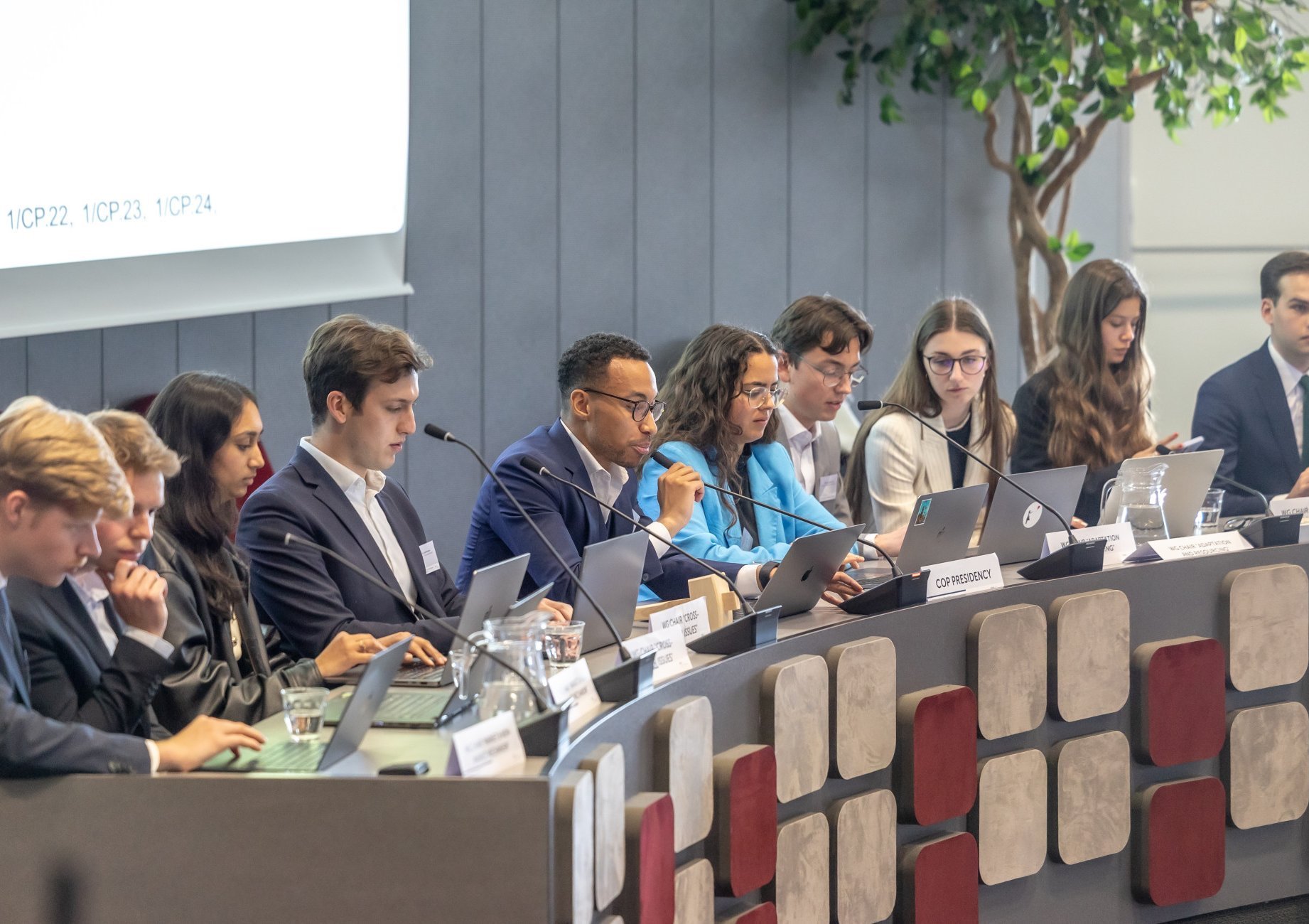
It culminates in a two and a half-day Model UNFCCC negotiation, where more than 180 students from across the CEMS network assume the roles of:
Through this immersive experience, students move beyond theoretical understanding and confront the complexity of decision-making in a rapidly changing global system.